Does a rain gutter cleaning service need to test flow before quoting the job?
A debris-removal price and a drainage diagnosis are different purchases. A rain gutter cleaning service should inspect the dry system before finalizing its scope, while a controlled hose test is usually more useful after loose debris has been removed.
Key takeaways
- The quote should say whether flow testing is included, provisional, or excluded.
- A dry inspection should trace water from the roof edge to the final visible discharge point.
- A measured hose test verifies operation only at the tested flow. It does not prove storm capacity.
- Cleaning cannot correct failed seams, reverse pitch, undersized components, damaged fascia, or buried-drain restrictions.
- The final report should separate cleaning results, unverified components, repair needs, and trade referrals.
Contents
- Define the flow test and pricing conditions
- Inspect the dry drainage path
- Measure hose flow
- Check outlets, downspouts, and discharge
- Separate quote line items
- Refer defects to the correct trade
A rain gutter cleaning service should define flow testing before issuing the final scope
A rain gutter cleaning service should inspect the system before quoting, but a complete hose test may need to wait until loose debris is removed. The quote should define when testing occurs, how flow is checked, and which defects require work beyond cleaning.
- State whether inspection will occur from the ground, a ladder, or the roof edge.
- Identify open gutters, screens, and proprietary guard systems.
- Label the price as fixed or provisional pending debris removal.
- List restrictions involving water use, unsafe access, freezing weather, drought rules, or occupied areas below.
- Define completion as testing each accessible run, observing its outlet, confirming visible downspout discharge, and documenting defects.
A pre-cleaning hose test can create overflow without diagnosing the underlying gutter defect
Water forced into a debris-filled run may wet fascia, walls, entrances, or foundations and create a slip hazard. The overflow also cannot reliably distinguish a blocked outlet from poor pitch, a crushed downspout, or damaged components. Remove loose debris before controlled testing begins.
A conditional quote is appropriate when the rain gutter cleaning service cannot safely verify flow
A conditional quote should identify untested runs, concealed outlets, buried connections, inaccessible guards, and assumed discharge conditions. Additional diagnostics or repairs should require owner approval supported by photographs and component-specific notes. The remaining question is what the cleaner can establish without adding water.
What should a rain gutter cleaning service inspect before introducing test water?
The dry inspection should map every accessible water path from the roof edge to the final discharge point. That record identifies visible defects, likely restrictions, and sections that should not be flooded.
The pre-quote gutter inspection should follow the complete path from roof edge to discharge point
Measure each gutter run and record its nominal profile. Note the location and dimensions of outlets and downspouts. Check seams, end caps, miters, hangers, fascia, and guard attachments for separation, corrosion, deformation, loose fasteners, or staining associated with repeated overflow.
Trace each source feeding the run. The field record should identify contributing roof areas, valleys that concentrate runoff, and upper-roof downspouts that release water onto lower roofs or directly into lower gutters. Labels such as gutter G1, outlet O1, and downspout D1 keep photographs and repair recommendations tied to the correct component.
Continue through elbows, vertical downspouts, extensions, splash blocks, and visible underground connections. Record where each line terminates relative to the foundation, walks, neighboring property, and buried drainage. Check local discharge and property-line restrictions before proposing a reroute.
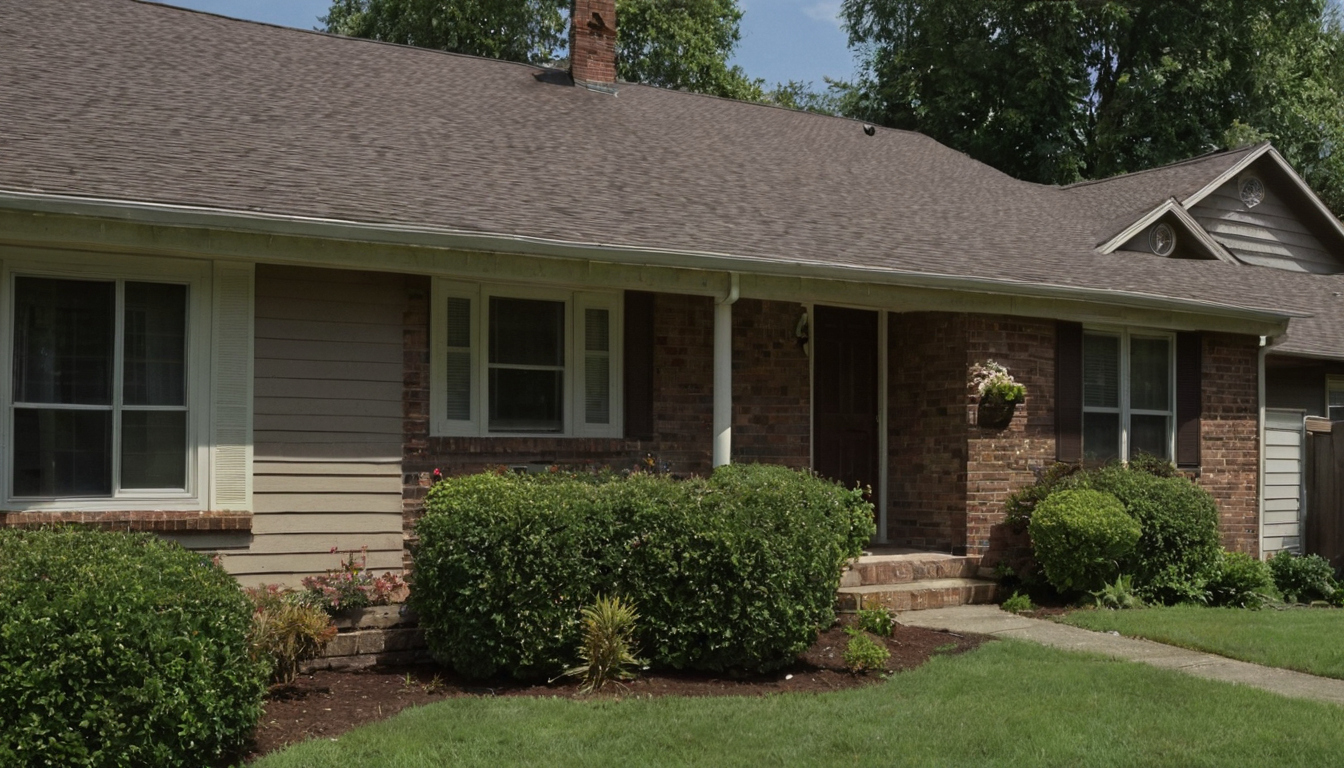
What should a rain gutter cleaning service inspect before introducing test water shown as an editorial planning reference.
Height, steep roof pitch, landscaping, overhead utilities, guards, and inaccessible buried piping may prevent a complete diagnosis. Include those limits in the quote. Once the dry path is mapped and unsafe points are excluded, measured water can test conveyance without being mistaken for proof of storm capacity.
A measured hose test verifies gutter conveyance but does not prove design-storm capacity
A measured hose test can confirm that water reaches an outlet, passes through a downspout, and appears at the intended discharge under the tested flow. It cannot establish storm capacity unless delivery rate, roof area, rainfall intensity, gutter geometry, outlets, and downspouts are evaluated together.
- Do not treat faucet pressure as flow. Measure the water delivered at the hose end.
- Stop if test water threatens siding, soffits, foundations, electrical equipment, pedestrians, or interior spaces.
- Record the entry point, delivery rate, duration, backup location, outlet behavior, and visible discharge.
- Call the result an operational flow check unless a qualified capacity calculation supports a stronger conclusion.
How should a rain gutter cleaning service measure hose flow?
The cleaner should measure actual delivery with a timed-volume procedure after removing loose debris. A nozzle, splitter, long hose, pressure regulator, or partially opened valve can alter delivery, so use the same setup for the measurement and the gutter test.
- Fill a container of known capacity from the test hose and record elapsed time.
- Convert the collected volume and elapsed time to gallons per minute.
- Repeat the measurement without changing the valve, nozzle, or splitter settings.
- Introduce water at the documented upstream point without directing the stream over the gutter edge.
- Follow the written test protocol, then record drainage, backup, leakage, standing water, and discharge.
The quote should identify the protocol used to set duration, repetition, and stop conditions. Phrases such as “medium pressure” or “full hose” are not reproducible measurements.
How does roof area convert local rainfall intensity into required drainage flow?
A capacity review relates contributing roof area to locally applicable rainfall intensity through an authoritative drainage method with verified unit conversions. The record should identify the precipitation publication, location, rainfall duration, recurrence interval, and units instead of inserting an undocumented rainfall value.
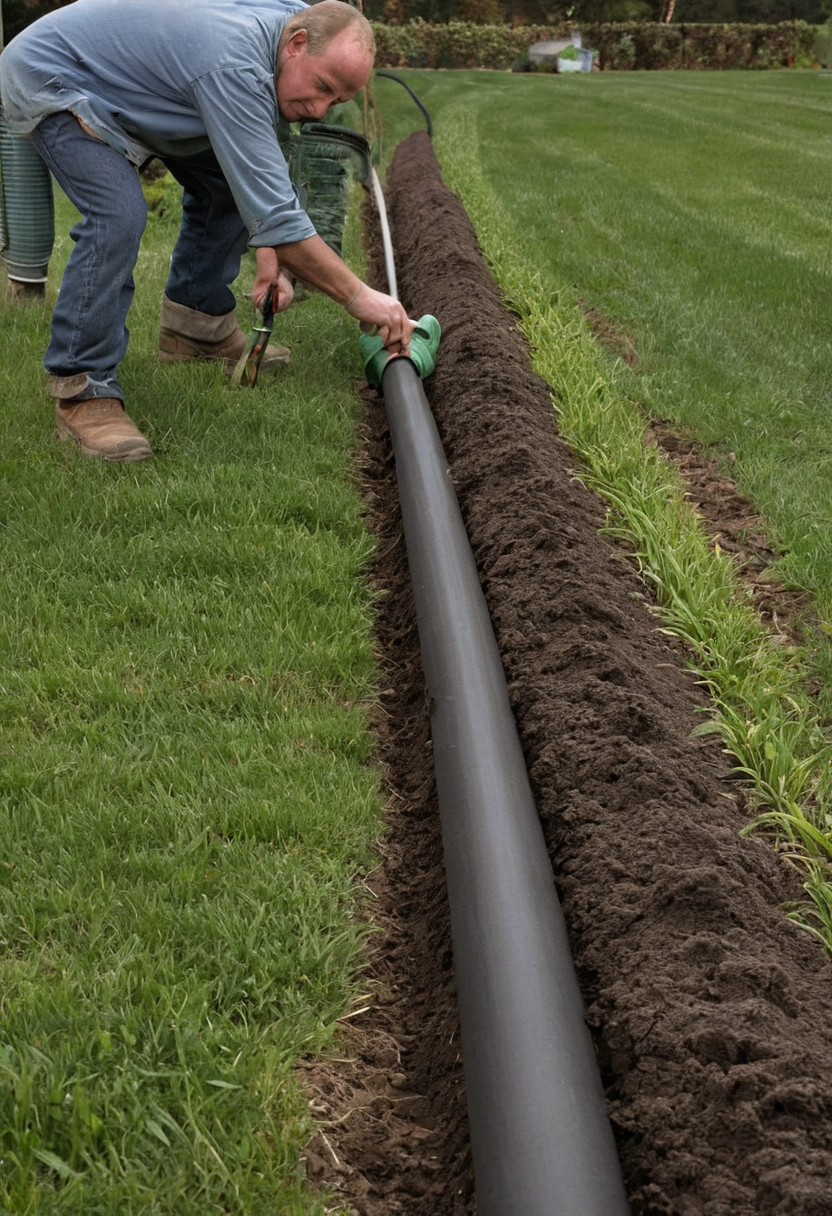
A measured hose test verifies gutter conveyance but does not prove design-storm capacity shown as an editorial planning reference.
The area assessment may also need to address roof slope under the selected method, concentrated valley flow, wall drainage, and upper-roof downspouts. Gutter profile, outlet count, outlet geometry, and downspout cross-sectional area then determine whether the installed path can convey calculated runoff.
Applicable requirements depend on adopted codes and local amendments. The Insurance Institute for Business & Home Safety roof-code guidance advises confirming current requirements with the authority having jurisdiction, especially when field conditions differ from manufacturer or industry guidance.
Gutter slope should be checked against the installed system rather than a universal rule
Record gutter slope as elevation change over a stated run length and compare it with the installed product instructions or recognized trade criteria. The report should mark high points, low points, outlets, reverse pitch, and standing-water pockets. No single slope value covers every profile, outlet arrangement, installation method, or local requirement.
An acceptable slope cannot overcome a restricted outlet or inadequate downspout. Testing must continue through the outlet and final discharge before cleaning can be declared successful.
Outlet, downspout, and discharge checks determine whether gutter cleaning can solve the problem
Cleaning can remove accessible obstructions from troughs, outlets, elbows, and downspouts. It cannot correct an undersized outlet, reverse pitch, failed seam, crushed pipe, loose fascia, inadequate downspout area, or blocked underground drain.
A gutter defect table should separate cleaning items from repair and drainage items
| Observation | Cleaning response | Corrective response |
|---|---|---|
| Loose debris | Remove and retest | None if flow passes |
| Blocked outlet or elbow | Clear accessible material | Replace or alter defective components |
| Open seam | None | Reseal or replace |
| Loose hanger | None | Inspect substrate and reattach |
| Reverse pitch | Remove debris only | Reset the gutter run |
| Deteriorated fascia | Stop attachment work | Repair the roof edge |
| Buried-drain backup | Document and stop testing | Investigate the underground line |
The report should classify each component as passing, restricted, blocked, leaking, backing up, or inaccessible. Observed symptoms set scope boundaries but do not prove concealed causes.
Downspout verification should continue to the visible discharge or documented connection
A clear above-grade downspout should produce observable discharge without sustained backup or leakage. If a downspout passes water after disconnection from a buried adapter, the remaining restriction belongs to the underground drainage path.
An inaccessible buried line should remain unverified unless the contractor observes its discharge or performs a separate investigation. Stop testing if water escapes near the foundation, reaches electrical equipment, or threatens interior entry. Those findings must become separate quote items rather than an uncontrolled change order.
A gutter-cleaning quote should separate debris removal, flow testing, and corrective work
A comparable quote should identify debris removal, disposal, outlet clearing, downspout access, controlled testing, photographs, and cleanup as inclusions or exclusions. Guard removal, pitch correction, joint sealing, outlet replacement, underground-drain work, and roof-runoff correction need separate authorization when they require more labor, materials, or licensing.
How do contractors quote a gutter-cleaning job without hiding scope differences?
| Scope item | Quote treatment |
|---|---|
| Debris removal and disposal | Included or fixed price |
| Outlet and accessible downspout clearing | Included or unit-priced |
| Measured flow test and photographs | Included or optional diagnostic |
| Guards, steep roofs, limited access, or compacted debris | Allowance or stated change-order condition |
| Repairs and buried-drain work | Excluded pending authorization |
The pricing basis should identify relevant factors such as linear footage, building height, access, guard type, downspout count, and expected labor. The quote should also state the authorization threshold for added work, callback terms for cleaning, repair warranty terms, and required completion records.
Corrective products governed by code-referenced test standards should retain verified product labeling. The IBHS explanation of codes and referenced standards notes that requirements are updated periodically and may depend on locally adopted provisions.
The lowest gutter-cleaning price may omit downspout and discharge verification
A low total does not establish poor work, but it may exclude guard handling, measured testing, downspout verification, discharge inspection, photographs, or defect notes. Buyers should compare contractor bids when the scopes do not match before selecting the lowest number.
When should a rain gutter cleaning service refer defects to a roofer or drainage contractor?
A rain gutter cleaning service should refer damaged roof edges, deteriorated fascia, failed flashing, unstable attachments, chronic overflow through clear components, and buried-drain backups. The report should identify observations, immediate water-entry risks, and the responsible trade without diagnosing concealed damage.
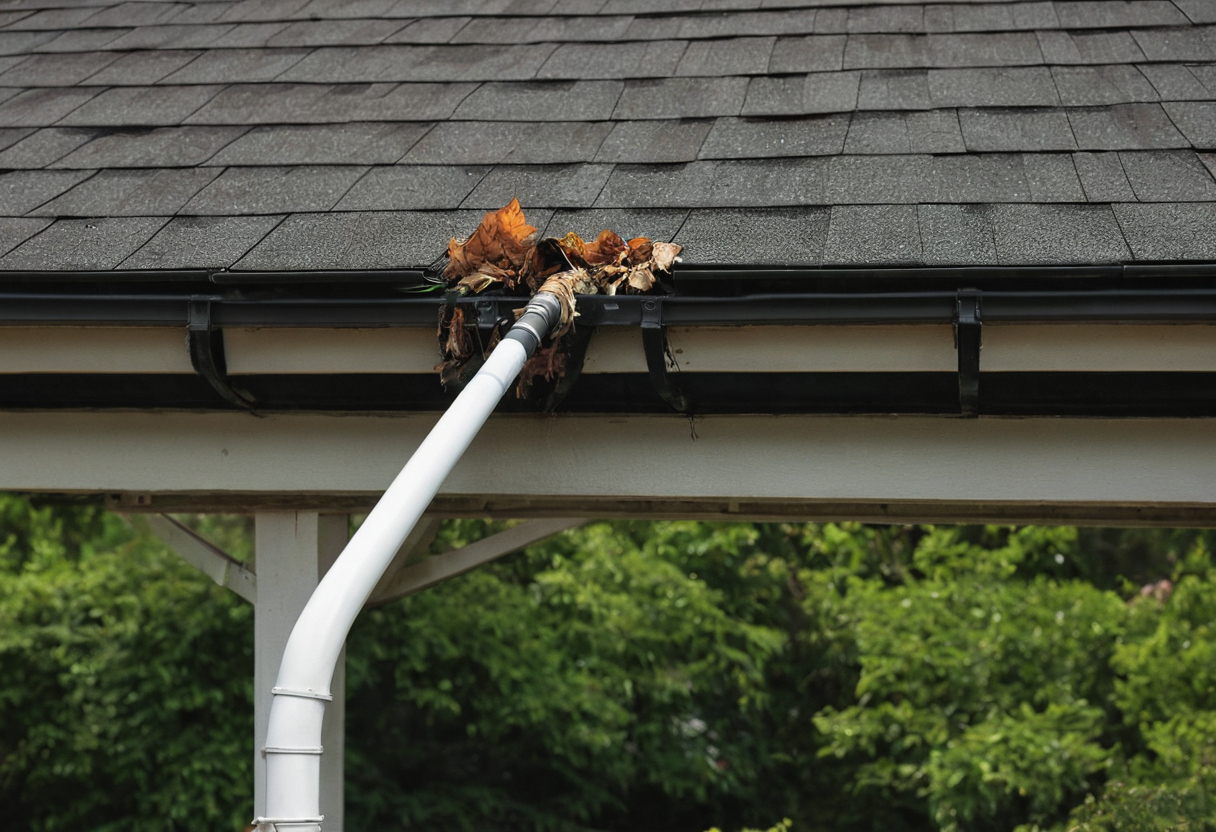
When should a rain gutter cleaning service refer defects to a roofer or drainage contractor shown as an editorial planning reference.
Roof-edge leakage requires triage beyond routine gutter cleaning
Stop testing if water enters the building, moves behind fascia, reaches electrical equipment, or shifts a loose gutter or roof-edge component. A roofing or sheet-metal contractor should assess flashing and roof-edge details. A carpenter may need to assess decayed fascia or rafter tails. A plumber or drainage contractor should trace buried-line backups and defective discharge connections.
Report language should separate observation from inference. “Water appeared behind the fascia during testing” records a visible event. “Concealed flashing has failed” states an unverified cause. Active entry requires the owner to triage a roof leak that may need immediate protection.
Roof repairs must follow the code adopted for the property even where a permit is not required, and local amendments may alter model-code provisions. Contractors should confirm licensing boundaries before changing roofing, gutter attachments, plumbing connections, or underground drainage. The IBHS guide to adopted roofing codes and local amendments explains why the authority having jurisdiction must confirm applicable requirements.
Ladder and roof-edge access can limit the gutter inspection and test
Unsafe access makes the quote provisional rather than complete. The employer must determine which workplace-safety requirements apply and provide suitable ladder practices, walking-surface controls, and fall protection. Stop-work conditions should address wind, lightning, ice, wet surfaces, unstable edges, unsuitable roof access, and overhead electrical exposure.
The practical decision is simple: purchase a documented cleaning and controlled test only where access is safe, then route every unresolved defect to the trade responsible for that section of the water path.
Frequently asked questions
How much should I expect to pay to have my gutters cleaned out?
Pricing varies with linear footage, building height, access, guard type, debris condition, and downspout work. Request a written scope instead of relying on a national average that may not match the property.
How do contractors quote a gutter-cleaning job?
Contractors may price by measured footage, expected labor, building height, access difficulty, downspout count, or a documented combination. The quote should show which diagnostic and cleanup tasks are included.
How much does combined roof and gutter cleaning cost?
The combined price depends on roof material, pitch, access, cleaning method, gutter length, guards, and runoff controls. Roof cleaning and gutter cleaning should appear as separate scope items so exclusions remain visible.
How do professionals clean and test hard-to-reach gutters?
Professionals select access equipment and fall protection for the site, remove debris without forcing it into downspouts, and test only accessible runs under controlled conditions. Document unsafe or concealed sections as unverified.
Should a gutter-cleaning price include downspout and flow testing?
It may, but inclusion should never be assumed. The quote should state whether accessible downspout clearing, measured flow testing, visible discharge verification, photographs, and defect reporting are included or separately priced.